
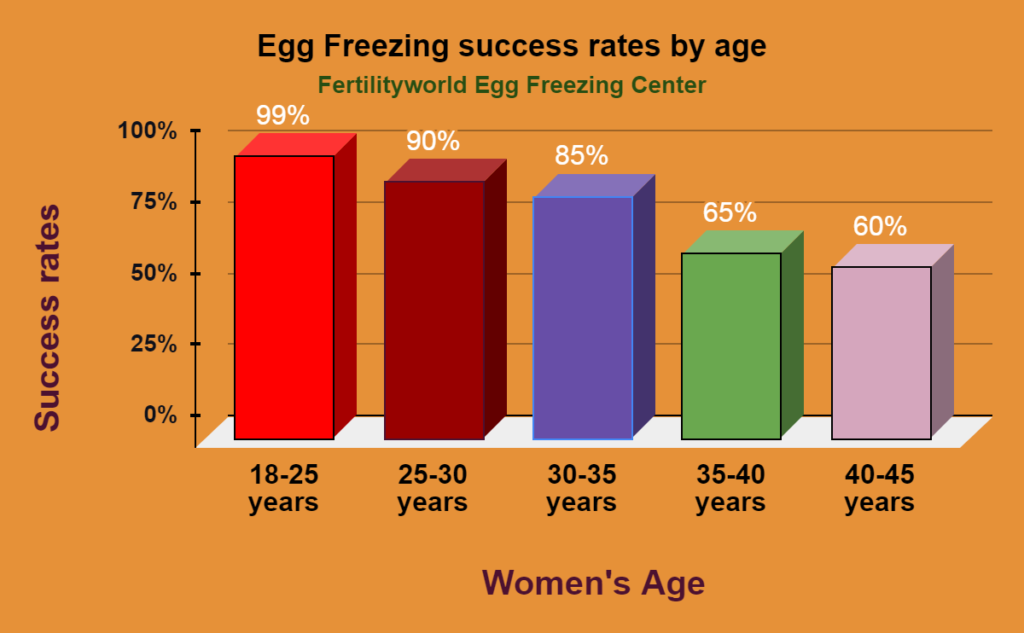
Egg freezing – technically called oocyte cryopreservation – is one of the most empowering fertility options available to women today. It allows you to preserve your eggs now, at their current quality, for potential use in the future. But when is the right time? And is it available in Chandigarh?
Why Age Matters So Much
Egg quality is directly tied to age. As women age, chromosomal abnormalities in eggs increase significantly:
- Age 25–30: ~90% of eggs chromosomally normal
- Age 35: ~70% normal
- Age 40: ~40% normal
- Age 43+: ~20% normal
When you freeze eggs at 30, you are banking 30-year-old quality eggs for use at 38 or 42. This is the fundamental advantage of early egg freezing.
The Ideal Age Window for Egg Freezing
- Best results: 28–33 years – good egg quality, good ovarian reserve, optimal response to stimulation
- Still worthwhile: 34–37 years – results are good but more eggs needed per cycle for reasonable success rates
- More complex: 38+ – possible but lower success rates per egg; multiple cycles often needed; consult a specialist before deciding
How Many Eggs Do You Need?
To have a reasonable chance of achieving one live birth, most specialists recommend having 15–20 mature frozen eggs. The number of eggs retrieved per cycle depends on your ovarian reserve (AMH) and response to stimulation.
At 30, one cycle may yield 12–20 eggs. At 38, the same stimulation might yield 4–8 eggs. This is why doing it earlier usually means fewer cycles needed.
What Does the Process Involve?
- Initial fertility evaluation (blood tests, ultrasound)
- 10–14 days of self-administered hormone injections to stimulate multiple egg development
- Monitoring scans every 2–3 days
- Egg retrieval procedure (under sedation, 20–30 minutes)
- Eggs are vitrified (flash-frozen) and stored
Considering egg freezing in Chandigarh? Start with a fertility evaluation. fertility evaluation Book a consultation at Sadhbhavna Clinics to assess your ovarian reserve and discuss your options. Contact us here.