
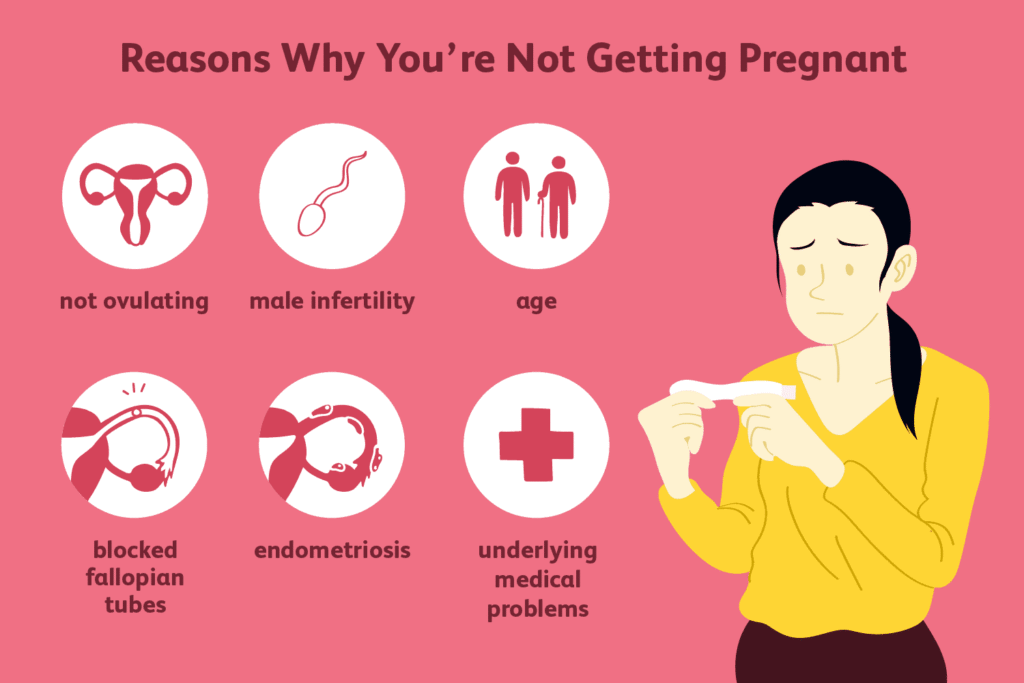
When you’ve been trying for a baby for several months without success, the mind races to the worst possibilities. But often, the reason is something identifiable and treatable – and not what you’d expect. Here are six commonly missed reasons for difficulty conceiving.
1. Timing Is Off
This is the most commonly missed factor. Conception only happens in a narrow window around ovulation – typically 5 days before ovulation and the day of ovulation itself. If you have irregular cycles (common in PCOS) or are miscalculating your fertile window, you may be missing it entirely. Using ovulation predictor kits or tracking basal body temperature helps significantly.
2. Thyroid Disorder
Both hypothyroidism and subclinical hypothyroidism (slightly raised TSH with no obvious symptoms) can prevent conception by disrupting ovulation and implantation. Thyroid issues are very common in women in North India. A simple blood test can rule this out – and treatment is straightforward.
3. Male Factor Not Checked
In my experience, this is the most commonly skipped investigation. About 40% of couples struggling to conceive have a male factor component – low sperm count, poor motility or abnormal morphology. A semen analysis is quick, cheap and non-invasive. Please do not wait 12 months testing the woman extensively before checking this.
4. Blocked Fallopian Tubes
Blocked or damaged tubes prevent the sperm and egg from meeting. This is often asymptomatic – no pain, no symptoms. Causes include previous pelvic infections (including STIs), endometriosis or previous pelvic surgery. An HSG (X-ray dye test) checks tubal patency and is part of any standard infertility workup.
5. Elevated Prolactin
Prolactin is the hormone responsible for breast milk production, but elevated levels outside of breastfeeding can suppress ovulation. Hyperprolactinaemia can be caused by a small benign pituitary tumour (prolactinoma), stress, or medications. It’s easily treated once diagnosed.
6. Undiagnosed Endometriosis
Endometriosis – where uterine tissue grows outside the uterus – affects about 10% of women and is a significant cause of infertility. Many women have it for years before diagnosis because the symptoms (painful periods, pelvic pain) are often dismissed as “normal.” Ultrasound can detect moderate-to-severe endometriosis; laparoscopy is the definitive diagnostic tool.
If you’ve been trying to conceive for more than 6 months (or 3 months if over 35), please don’t wait and hope. Book a fertility evaluation at Sadhbhavna Clinics Chandigarh and let’s find the cause.